What if learning about democracy could be engaging, interactive, and fun?
Within the Your Democracy project, partners across Europe developed and tested an innovative digital board/card game designed to help young people better understand democracy, participation, and media literacy through gamified learning.
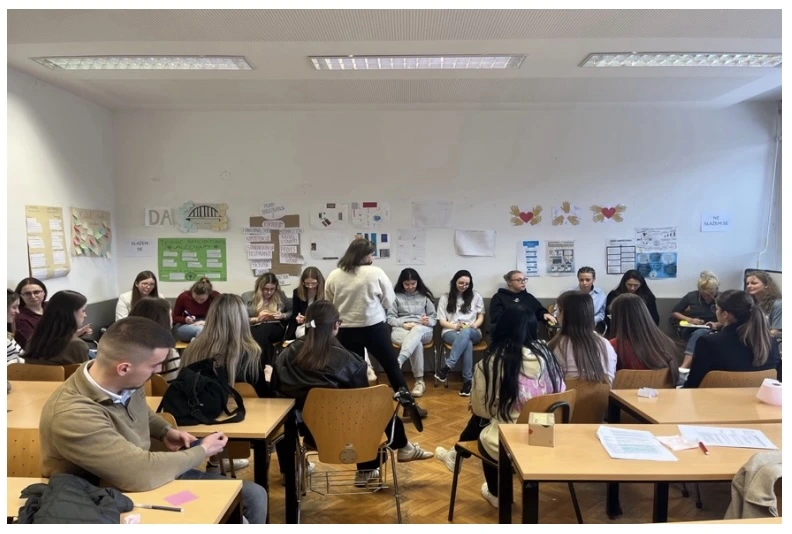
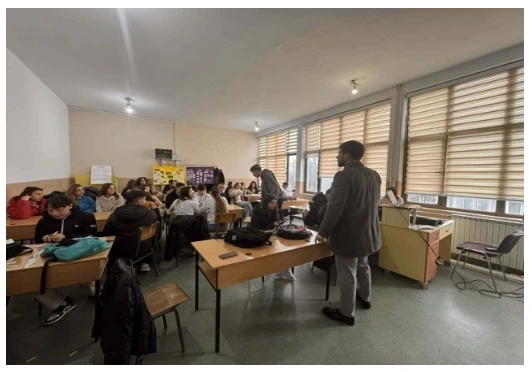
The piloting phase brought this concept to life — testing the game in real youth work environments and directly involving young people in its improvement.
The game was piloted with more than 125 young people across five countries — Croatia, France, Estonia, Sweden, and North Macedonia.
Activities were implemented in:
Each session combined gameplay with reflection, allowing participants not only to play but also to discuss, analyse, and connect the experience to real-life democratic processes.
Young people were actively involved in evaluating the game, providing feedback that directly contributed to its final version.
The results of the piloting phase clearly showed that the game achieved its purpose.
Across all countries:
The game also proved effective in encouraging discussion, with the majority of participants stating that it created space for meaningful dialogue and exchange of perspectives.
One of the strongest outcomes of the game was its ability to open conversations.
In Croatia, participants reported feeling more confident expressing their opinions and better understanding how decisions are made in democratic societies.
In France, the game was described as a safe and neutral way to discuss complex social and political topics, helping participants challenge their own assumptions and explore different viewpoints.
In Estonia, online piloting highlighted the game’s adaptability to digital environments, while also providing valuable insights into usability and interaction in virtual settings.
Across all countries, the game helped young people connect abstract concepts like democracy and participation with real-life experiences.
A key strength of the piloting process was its participatory approach.
Young people were not just players — they were co-creators in refining the final product.
Their feedback led to improvements such as:
This ensured that the final version of the game is not only educational, but also accessible, inclusive, and engaging.
The digital board/card game represents a new way of learning about democracy — one that moves beyond traditional methods and places young people at the centre of the learning process.
By combining play, discussion, and reflection, the game helps young people: